
Maybe it was a sports accident in high school. Maybe a back tooth that caused trouble, and you just had it pulled. Life got busy, and you never got around to replacing it. Years have passed. You’ve learned to chew on the other side. You don’t even think about the gap anymore. But recently, you’ve wondered: is it too late for a dental implant? The short answer is no. But there’s a little more to it than that.
What Happens to the Gap Over Time
When a tooth goes missing, your body notices. The jawbone underneath that tooth no longer gets stimulation from chewing. So your body does what it naturally does with anything it isn’t using: it starts to reabsorb the bone.
Think of it like a muscle that shrinks when you stop exercising it. Over months and years, that section of your jawbone gets thinner and shorter. This process is called bone resorption. In the first year after losing a tooth, you can lose 25% of the bone width. That number keeps climbing over time.
Why Bone Matters for Implants
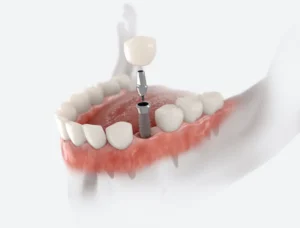
A dental implant is a small titanium post that acts like an artificial tooth root. It needs enough healthy bone to hold it securely. If too much bone has melted away, there’s nothing to anchor the implant. That sounds like bad news. But here’s the good news: we can often rebuild what’s been lost.
Solutions for Older Gaps
At Center Valley Dental, we see patients all the time who lost teeth ten, fifteen, even twenty years ago. Dr. Lang’s advanced training through the Misch International Implant Institute means he has extensive experience with exactly these situations.
Here are the two most common solutions:
- Bone grafting. This is a procedure where we add bone material to the area that has shrunk. Over several months, that material fuses with your natural bone to create a stronger, thicker foundation. Once healed, you could be ready for an implant just like someone who lost the tooth yesterday.
- Sinus lift. For missing upper back teeth, the sinuses can expand into the space where bone used to be. A sinus lift gently raises the sinus floor and adds bone grafting material beneath it. It sounds complex, but it’s a routine procedure that often makes implant placement possible again.
The Best Time to Act Is Now
Here’s what we tell patients who worry they waited too long: the best time to get an implant was right after losing the tooth. The second best time is today.
Why? Because bone loss doesn’t stop. Every year you wait, your jawbone shrinks a little more. That doesn’t mean you can’t get an implant. It might just mean you need a bone graft first.
And bone grafts are very predictable. Your body accepts the material well. Healing happens gradually. Thousands of patients have successfully gotten implants years, even decades, after losing teeth.
Your Next Step
At Center Valley Dental, we perform every step of the implant process under one roof. From the initial 3D CBCT scan that measures your bone levels, to bone grafting if needed, to placing the implant itself, you never have to go somewhere else.
If you’ve been living with a gap and wondering if it’s too late, come see us. We’ll take a look, show you what’s happening under the surface, and give you honest answers about your options.
Call us at 610-467-2442 to schedule a consultation. You might be closer to a full smile than you think.